What Are You Really Paying For in a ₹20–40 Cr Luxury Apartment? It is a question many buyers ask when evaluating premium homes in Mumbai’s luxury real estate market. Most assume pricing mainly comes down to location, brand, and size. That is not wrong, but it is only part of the picture.
In reality, pricing at this level is layered and not always easy to interpret at first glance. Understanding this clearly is what separates a well thought out decision from an expensive one.
1. The Base Price: Location and Land Cost
Pricing usually starts with the micro market.
In areas like Worli, Bandra, or Malabar Hill, the land itself is expensive. That cost directly influences the base price per square foot.
However, this only sets the foundation. It does not fully explain the premium you see in the final pricing.
2. The Invisible Layer: View Premium
At this level, view plays a much bigger role than most buyers expect.
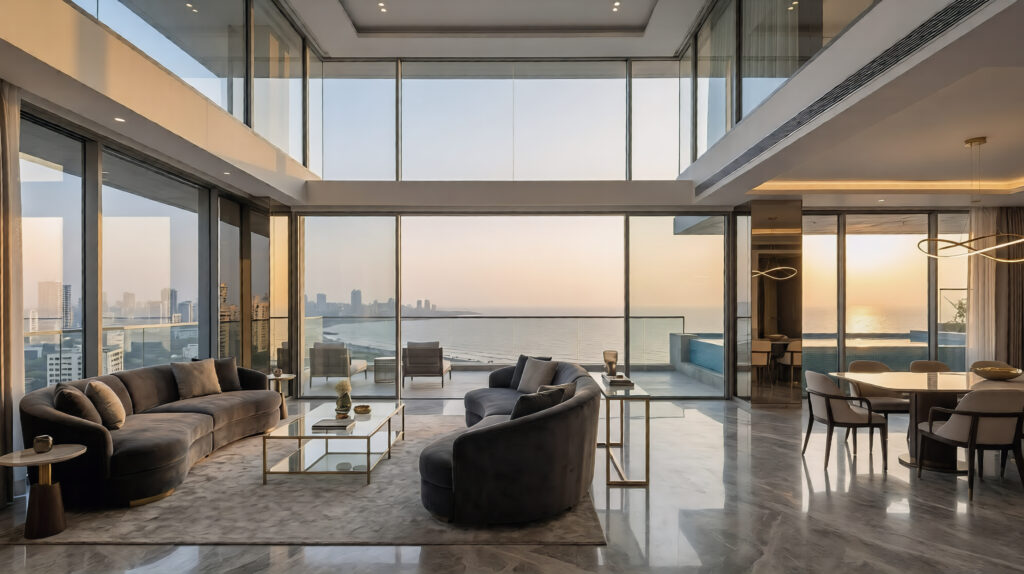
Two apartments within the same building, with similar sizes and layouts, can still be priced very differently. A clear sea view or an open city view can easily create a noticeable price gap compared to a unit facing another structure.
Over time, this is not just about what you see every day. It also affects how the property holds value in the resale market.
3. Floor Rise: Perception vs Reality
Higher floors are often priced at a premium, and in many cases, buyers automatically assume they are better. But this is not always true.
It is worth asking whether the higher floor actually improves your living experience. Does it offer a better view, more light, or better ventilation? Or is the additional cost simply based on perception?
There is often a point where the price increases, but the actual benefit does not.
4. Layout Efficiency: Where Value Is Often Lost
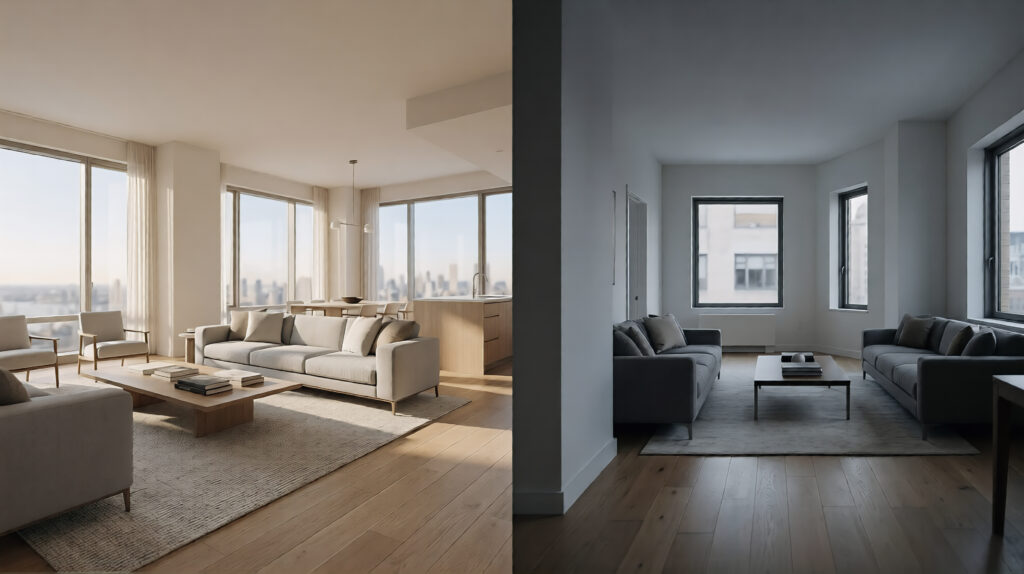
Even when two apartments have similar carpet areas, for example around 2,500 sq. ft., they can feel completely different.
This usually comes down to how the space has been planned. Long passages, awkward corners, or poorly proportioned rooms can reduce how usable the space actually is.
In such cases, you are technically paying for area that does not contribute to your everyday living experience.
5. Developer Positioning and Branding Premium
Well known developers often charge a premium, which is influenced by their reputation, past delivery, and how they are positioned in the market. But this premium is not always straightforward.
Sometimes you are paying for consistency and execution quality. At other times, the pricing reflects brand perception more than actual value. Knowing the difference makes a significant impact on how you evaluate the project.
6. Future Expectations Built Into Today’s Price
In many new launches, current pricing already includes expectations about the future.
This can be related to upcoming infrastructure, anticipated appreciation, or overall market sentiment.
As a result, part of the future upside may already be built into the price you are paying today. This is where buyers often end up overpaying without realizing it.
7. Scarcity vs Supply Reality
Luxury projects are often presented as exclusive, which creates a strong perception of limited availability.
However, it is important to look at the larger picture. How many similar options exist in the same micro market, and what new supply is expected in the near future?
In some situations, what feels exclusive today may not remain so over time.
The Real Insight
At this price point, you are not just paying for a home or even just the location.
You are paying for a mix of perception, planning quality, view, and when you are entering the market.
A Practical Way to Think About It
Before making a decision, it helps to break the price down in your mind.
What part reflects real value? What part is based on future expectations? And what part is simply a premium that may not translate into actual benefit?
This clarity changes the way you approach the purchase.
In luxury real estate, pricing is rarely random, but it is not always transparent either.
Because in the end, the goal is not to avoid paying a premium. It is to understand whether that premium is justified.
Frequently Asked Questions
1.Why do prices at this level feel so high even when apartments look similar?
In Mumbai’s luxury real estate, a lot of the pricing is not immediately visible. You are not just paying for the apartment itself, but also for things like location, view, timing, and how the project is positioned in the market.
2. Is location really the main reason behind the price?
Location is definitely important because land cost drives the base pricing. But it does not explain everything. Two homes in the same area can still be priced very differently.
3. Does the view really make that much difference?
Yes, more than most people expect. In luxury real estate, even within the same building, a better view can change both the experience of living there and how the property performs later.
4. Are higher floors always a better choice?
Not always. Higher floors are often preferred, but they are not automatically better. Sometimes the difference in price is more about perception than actual comfort.
5. Why do two homes with similar sizes feel completely different?
This usually comes down to planning. If the layout is not efficient, a large home can still feel uncomfortable. On the other hand, a well planned space feels more usable and easier to live in.
6. Is it always worth paying extra for a known developer?
Not in every case. Sometimes the premium reflects real quality, but sometimes it is more about reputation. It helps to look at what you are actually getting for that price.
7. Why do some new projects feel expensive from the beginning?
In many cases, future expectations are already built into the price. This includes things like upcoming infrastructure or expected appreciation, which reduces the room for future gains.
8. How should I look at pricing before making a final decision?
It helps to slow down and break it into parts. Try to understand what you are actually paying for, what is based on expectation, and what may not add real value. That clarity makes the decision easier.