Real Estate

When not to buy luxury real estate

When Not to Buy: The Discipline Behind a Good Real Estate Decision

Knowing when not to buy luxury real estate can be just as important as finding the right property. But experienced buyers also understand that knowing when to walk away can be just as valuable. In a market filled with premium launches, iconic addresses, limited inventory and increasingly sophisticated sales narratives, the challenge isn’t always finding something desirable. The real challenge is deciding whether it is actually the right decision for you. A beautiful home can create an emotional response within minutes. A sound real estate decision, however, requires considerably more thought. At OBL Advisory, we believe good advisory isn’t simply about identifying opportunities. It is also about recognising when an opportunity doesn’t justify the price, doesn’t fit the objective, or simply isn’t the right property at the right time. The Difference Between a Great Property and a Great Decision A property can be exceptional and still be the wrong purchase. It may have an excellent address, impressive architecture, premium amenities and a renowned developer behind it. But the price may already reflect all of those advantages, and more. This is where objective analysis becomes important. The question shouldn’t simply be: “Is this a good property?” It should be: “Is this the right property, at this price, for this particular buyer?” That distinction is at the heart of luxury real estate advisory. When the Price Doesn’t Match the Value One of the easiest mistakes to make in luxury real estate is assuming that a higher price automatically means higher value. It doesn’t. A premium may be justified by factors such as: Exceptional location Uninterrupted views Scarcity of comparable inventory Superior planning and design Developer reputation Large and efficient layouts Strong future demand Limited future supply But every premium should have a reason behind it. A ₹15 crore home isn’t necessarily better value than a ₹10 crore home simply because it costs more. The important question is: What exactly are you paying the additional ₹5 crore for? If the answer isn’t clear, it may be worth taking a step back. When the Property Is Being Driven by Emotion Luxury purchases are naturally emotional. For many buyers, a home represents lifestyle, achievement, family and legacy. There is nothing wrong with that. The problem begins when emotion starts replacing analysis. A spectacular view, an impressive entrance lobby or a beautifully designed sample apartment can create an immediate emotional connection. But before making a significant financial commitment, it is worth stepping back and asking: Would I still make this decision if the emotional excitement was removed? If the answer changes, that’s a signal worth paying attention to. When the Property Doesn’t Fit the Buyer’s Objective Not every luxury property is right for every buyer. One client may prioritise privacy. Another may prioritise appreciation potential. Someone else may want a trophy residence that will remain in the family for generations. An investor may prioritise liquidity and future demand. A property can be excellent for one objective and completely unsuitable for another. That’s why good advisory begins with understanding the buyer before evaluating the property. When Scarcity Is Being Confused With Value “Limited inventory” is powerful language in luxury real estate. But limited supply doesn’t automatically mean exceptional value. The right question is: Is the property genuinely scarce, or is the scarcity simply a function of the current sales strategy? True scarcity is structural. It can come from factors such as limited land, an irreplaceable location, protected views, planning restrictions or an extremely limited number of comparable properties. Temporary inventory scarcity is different. Understanding that distinction can materially change how a buyer evaluates an opportunity. When the Future Doesn’t Look as Good as the Present One of the most overlooked aspects of luxury real estate is future visibility. A property may have an exceptional view today. But what happens when the surrounding land is developed? What will the neighbourhood look like five or ten years from now? Will infrastructure improve or create congestion? Will competing luxury developments increase supply? Will the address become more desirable, or simply more expensive? Good advisory isn’t only about understanding the property as it exists today. It is also about understanding what could change around it. When You Can’t Clearly Explain the Exit Even when purchasing a primary residence, it is worth thinking about the future. Circumstances change. Families grow. Businesses change. People relocate. Portfolios evolve. That doesn’t mean every home needs to be treated like a financial investment. But a ₹10 crore, ₹20 crore or ₹50 crore property deserves an understanding of its potential future liquidity. Ask yourself: Who would buy this property from me? How deep is the future buyer pool? Is the ticket size limiting? Are comparable properties available? What makes this address desirable beyond the current market cycle? A property can be beautiful and still be difficult to exit. When the Decision Is Being Rushed The luxury market often uses urgency. “Only two units left.” “Last opportunity at this price.” “Prices are increasing next week.” Sometimes these statements are legitimate. But a significant financial decision shouldn’t be made simply because someone has created a deadline. A good opportunity should stand up to a few additional questions. If a property is genuinely right, deeper due diligence should make the decision stronger, not weaker. The Most Valuable Advice Can Sometimes Be “Wait” There is a perception that an advisor creates value by helping a client find something to buy. I see it differently. An advisor can create just as much value by helping a client avoid the wrong purchase. Sometimes the right answer is: Not this property. Not at this price. Not for this objective. Not yet. Let’s wait for something better. That isn’t a failure to close a transaction. That’s advisory. The Discipline to Walk Away The luxury real estate market will always have another property, another launch, another address and another opportunity. The discipline lies in not feeling compelled to buy simply because something is available. For sophisticated buyers, the objective isn’t simply to own something exceptional.

When Not to Buy: The Discipline Behind a Good Real Estate Decision Read More »

Real Estate
Why Luxury Apartments in Mumbai Feel Different?

Why Two Luxury Apartments at the Same Price Feel Completely Different?

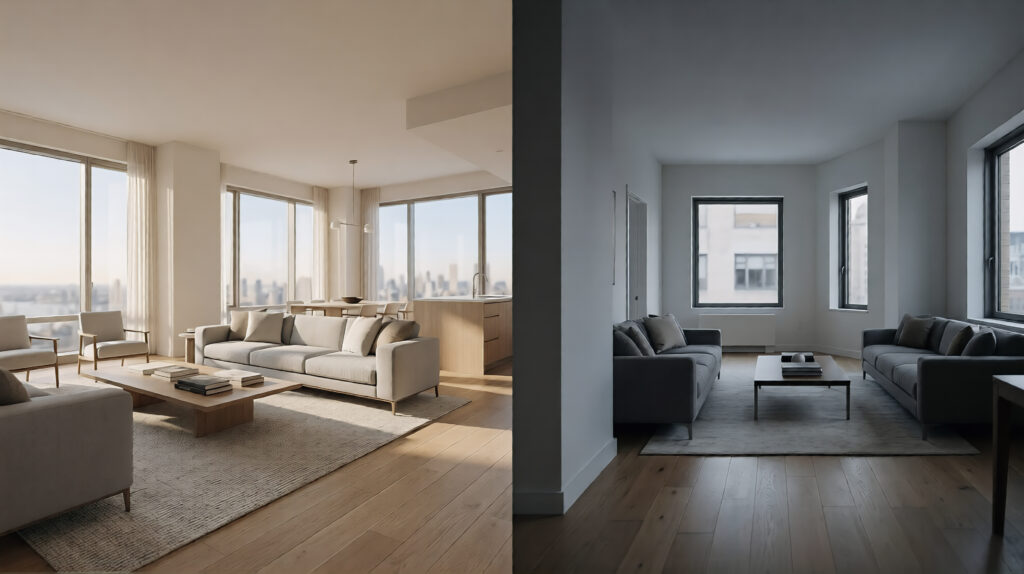
Why luxury apartments in Mumbai feel different is a question many buyers ask when comparing premium homes in the city’s luxury real estate market. It is quite normal to see two apartments priced almost the same. Still, the difference becomes obvious the moment you step inside. One feels right, while the other feels slightly off, even if everything looks similar on paper. At the 2,000 to 3,000 sq. ft. range, this gap is rarely about branding. It usually comes down to how well the home has been planned and how thoughtfully the space has been used. This is where working with a real estate consultant Mumbai buyers trust can help bring clarity to what often looks similar at first glance. 1. Carpet Efficiency vs Headline Size Two homes may show a similar carpet area, say around 2,200 to 2,500 sq. ft., but the actual usability can be very different. Often, the issue lies in layouts that include long passages, awkward corners, or spaces that are difficult to use properly. On paper, the numbers look strong, but in reality, not all of that space works for you. A well planned home makes better use of the available area, so what you see on paper also reflects how the home feels when you live in it. 2. Room Proportions That Actually Work In larger homes, planning becomes even more important. Take a living room as an example. A 450 sq. ft. space with the right width and layout can feel open and comfortable. But even a bigger room can feel tight if the proportions are not right. The same applies to bedrooms. A master bedroom in the range of 250 to 300 sq. ft. should feel easy to move around in, not just enough to place furniture. In the end, luxury is less about size and more about how usable and comfortable the space actually feels. 3. View and Openness At this level, a good view is not something extra. It is expected. Even then, two homes of similar size can offer very different experiences. One may open up to a clear sea or city view, while another may face another building or have partial blockage. This is often a key factor when evaluating luxury homes in Mumbai, as openness and views directly influence both living experience and long term value. This difference may not seem critical at first, but over time it directly affects both your living experience and the resale value of the property. 4. Floor Height and Environmental Comfort Higher floors are often seen as better, but that is not always the full picture. Things like wind conditions, heat exposure based on direction, and the balance between noise and privacy all play a role. Sometimes a slightly lower floor can offer a more comfortable living experience than a very high one. The right choice depends on overall comfort, not just the floor number. 5. Planning Intelligence as the Real Difference The most important differences are usually not obvious during a short visit. Homes that are well planned tend to have better natural light, proper ventilation, and a smoother internal flow. These are not things you always notice immediately, but they make a big difference once you start living in the space. Over time, these details are what separate an average decision from a well thought out one. Because in luxury real estate, you are not just choosing a certain square footage. You are choosing how the home will feel, function, and hold its value over time. Frequently Asked Questions 1. Why do two apartments with the same price feel so different?This happens quite often in Mumbai luxury real estate. Even if the size and pricing look similar, the actual experience depends on how the space is planned. Small things like layout flow, room proportions, and usable space make a noticeable difference once you step inside. 2. Does a bigger carpet area always mean a better home?Not really. Carpet area is just a number. What matters more is how that space is used. A well planned home can feel more spacious than a larger one with poor layout. 3. What should I actually compare when I see two similar properties?It helps to look beyond the basics. Try to notice how the rooms are shaped, how natural light comes in, and whether the space feels comfortable to move around in. These factors matter more in daily living. 4. How much difference does the view really make?In luxury homes in Mumbai, the view plays a big role. It is not just about what you see, but also how the space feels and how the property holds value over time. 5. Are higher floors always the better option?Not always. While higher floors are often preferred, they are not automatically better. Comfort depends on multiple things like wind, heat, and how the apartment is positioned. 6. How can I judge if a home is well planned without overthinking it?Usually, you can feel it during the visit itself. If the space feels open, easy to move in, and naturally lit, it is likely planned well. If something feels slightly off, it usually is. 7. Why do some large apartments still feel uncomfortable?That often comes down to poor planning. Extra passages, odd corners, or narrow layouts can make even a large home feel less usable. 8. Can a consultant actually help in such decisions?Yes, especially when options look similar. A real estate consultant Mumbai buyers work with can point out differences that are easy to miss and help you look at the decision more clearly.

Why Two Luxury Apartments at the Same Price Feel Completely Different? Read More »

Real Estate
What Are You Really Paying For in a ₹20–40 Cr Luxury Apartment?

What Are You Really Paying For in a ₹20–40 Cr Luxury Apartment?

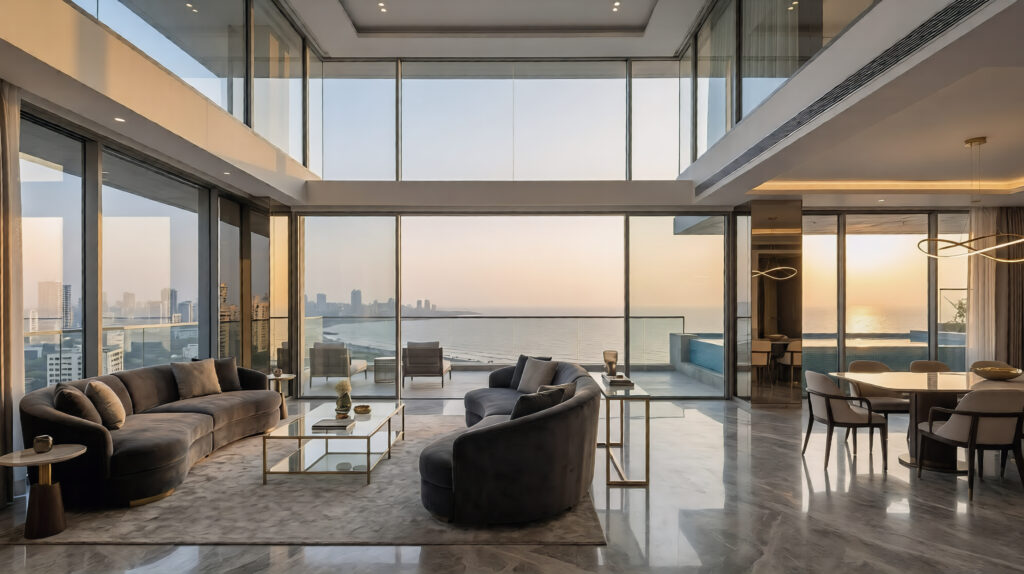
What Are You Really Paying For in a ₹20–40 Cr Luxury Apartment? It is a question many buyers ask when evaluating premium homes in Mumbai’s luxury real estate market. Most assume pricing mainly comes down to location, brand, and size. That is not wrong, but it is only part of the picture. In reality, pricing at this level is layered and not always easy to interpret at first glance. Understanding this clearly is what separates a well thought out decision from an expensive one. 1. The Base Price: Location and Land Cost Pricing usually starts with the micro market. In areas like Worli, Bandra, or Malabar Hill, the land itself is expensive. That cost directly influences the base price per square foot. However, this only sets the foundation. It does not fully explain the premium you see in the final pricing. 2. The Invisible Layer: View Premium At this level, view plays a much bigger role than most buyers expect. Two apartments within the same building, with similar sizes and layouts, can still be priced very differently. A clear sea view or an open city view can easily create a noticeable price gap compared to a unit facing another structure. Over time, this is not just about what you see every day. It also affects how the property holds value in the resale market. 3. Floor Rise: Perception vs Reality Higher floors are often priced at a premium, and in many cases, buyers automatically assume they are better. But this is not always true. It is worth asking whether the higher floor actually improves your living experience. Does it offer a better view, more light, or better ventilation? Or is the additional cost simply based on perception? There is often a point where the price increases, but the actual benefit does not. 4. Layout Efficiency: Where Value Is Often Lost Even when two apartments have similar carpet areas, for example around 2,500 sq. ft., they can feel completely different. This usually comes down to how the space has been planned. Long passages, awkward corners, or poorly proportioned rooms can reduce how usable the space actually is. In such cases, you are technically paying for area that does not contribute to your everyday living experience. 5. Developer Positioning and Branding Premium Well known developers often charge a premium, which is influenced by their reputation, past delivery, and how they are positioned in the market. But this premium is not always straightforward. Sometimes you are paying for consistency and execution quality. At other times, the pricing reflects brand perception more than actual value. Knowing the difference makes a significant impact on how you evaluate the project. 6. Future Expectations Built Into Today’s Price In many new launches, current pricing already includes expectations about the future. This can be related to upcoming infrastructure, anticipated appreciation, or overall market sentiment. As a result, part of the future upside may already be built into the price you are paying today. This is where buyers often end up overpaying without realizing it. 7. Scarcity vs Supply Reality Luxury projects are often presented as exclusive, which creates a strong perception of limited availability. However, it is important to look at the larger picture. How many similar options exist in the same micro market, and what new supply is expected in the near future? In some situations, what feels exclusive today may not remain so over time. The Real Insight At this price point, you are not just paying for a home or even just the location. You are paying for a mix of perception, planning quality, view, and when you are entering the market. A Practical Way to Think About It Before making a decision, it helps to break the price down in your mind. What part reflects real value? What part is based on future expectations? And what part is simply a premium that may not translate into actual benefit? This clarity changes the way you approach the purchase. In luxury real estate, pricing is rarely random, but it is not always transparent either. Because in the end, the goal is not to avoid paying a premium. It is to understand whether that premium is justified. Frequently Asked Questions 1.Why do prices at this level feel so high even when apartments look similar?In Mumbai’s luxury real estate, a lot of the pricing is not immediately visible. You are not just paying for the apartment itself, but also for things like location, view, timing, and how the project is positioned in the market. 2. Is location really the main reason behind the price?Location is definitely important because land cost drives the base pricing. But it does not explain everything. Two homes in the same area can still be priced very differently. 3. Does the view really make that much difference?Yes, more than most people expect. In luxury real estate, even within the same building, a better view can change both the experience of living there and how the property performs later. 4. Are higher floors always a better choice?Not always. Higher floors are often preferred, but they are not automatically better. Sometimes the difference in price is more about perception than actual comfort. 5. Why do two homes with similar sizes feel completely different?This usually comes down to planning. If the layout is not efficient, a large home can still feel uncomfortable. On the other hand, a well planned space feels more usable and easier to live in. 6. Is it always worth paying extra for a known developer?Not in every case. Sometimes the premium reflects real quality, but sometimes it is more about reputation. It helps to look at what you are actually getting for that price. 7. Why do some new projects feel expensive from the beginning?In many cases, future expectations are already built into the price. This includes things like upcoming infrastructure or expected appreciation, which reduces the room for future gains. 8. How should I look at pricing before making a final

What Are You Really Paying For in a ₹20–40 Cr Luxury Apartment? Read More »

Real Estate
New Launch vs Resale in Mumbai Luxury Real Estate

New Launch vs Resale in Mumbai Luxury Real Estate: What Actually Makes More Sense?

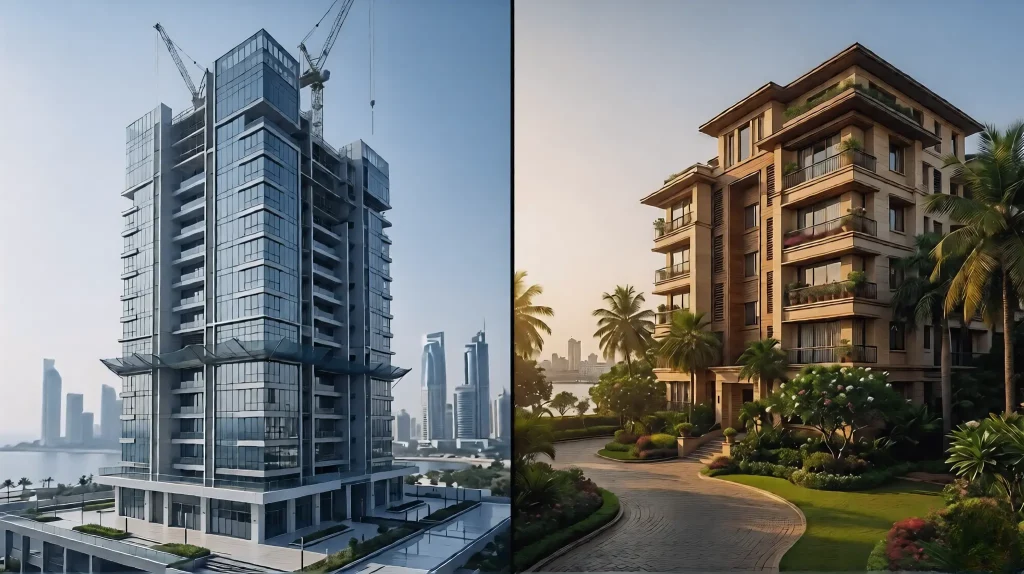
New Launch vs Resale in Mumbai Luxury Real Estate is a comparison many buyers face when exploring premium properties in the ₹15–40 Cr range. At first, it feels like a simple comparison. But in reality, both options behave very differently, and the better choice depends on timing, pricing, and what you actually want from the property. If you are exploring luxury flats in Mumbai, this is not a decision to rush, because both paths can work well when chosen correctly. When a New Launch Can Work in Your Favor In areas like Worli or Mahalaxmi, newer projects often bring better planning, updated layouts, and stronger amenities compared to older developments. If you enter at the right time, especially in the early phase, pricing can be slightly more favorable before it moves up in later stages. Another advantage is access. At launch, you usually get first pick of the better units. That includes apartments with open views, better orientation, and more efficient layouts. In most luxury projects, these are the units that get taken first. There is also the benefit of staggered payments. Instead of putting in the entire capital upfront, payments are spread across construction stages, which can make a difference in how you manage liquidity. Where New Launches Need More Careful Evaluation That said, not every new launch is automatically a good opportunity. In established areas like Bandra or Juhu, some projects are priced quite aggressively right from the beginning. In such cases, a part of the future growth is already built into the price. This reduces the margin for appreciation and increases the chances of overpaying. There is also the factor of time. Evenwith reputed developers, delays can happen. At this price point, time is directly linked to capital, so this is not something to overlook. When Resale Becomes a Stronger Option Resale works differently, and in some cases, it is the more straightforward choice. In locations like Malabar Hill or Tardeo, you are looking at established buildings and fully developed surroundings. You can see exactly what you are buying, including the view, the building quality, and the neighborhood. There is also the advantage of immediate use. Whether you plan to move in or generate rental income, resale properties are ready. At times, resale can also offer better value. This usually happens when there is a motivated seller or when pricing does not fully match nearby new launches. In some older premium buildings, you may also find larger usable spaces. How to Actually Think About This Decision The decision is not really about choosing between new and resale as categories. It comes down to your situation. How long you plan to hold the property, how comfortable you are with risk, and whether you are buying for personal use or investment. This is also where many buyers get stuck while figuring out how to choose luxury apartment options that genuinely match their needs instead of just following what is being marketed. A More Practical Way to Look at It A well timed entry into a new project in Worli or Mahalaxmi can deliver strong appreciation if pricing and timing align. On the other hand, a well negotiated resale in Bandra or Malabar Hill can offer immediate clarity, stability, and usability. Both approaches can work. The outcome depends on how carefully the decision is made. In Mumbai’s luxury real estate market, it is rarely about the category itself. It is about how well you understand what you are getting into before you commit. Because at this level, the difference is not in what you buy, but in how clearly you evaluate it. Frequently Asked Questions 1. Is there a clear winner between new launch and resale at this price level?Not really. It is not a direct comparison where one is always better. It depends on what you want. Some buyers value early entry and newer planning, while others prefer clarity and immediate usability. 2. Why do new launches attract so much attention in the beginning?A big reason is access. At launch, you get to choose from the best units, whether it is the view, layout, or floor. For someone looking at luxury flats in Mumbai, this early access can feel like a strong advantage. 3. What should I be careful about when considering a new launch?Pricing and timing. Sometimes the price already reflects future expectations, and delays can change the overall outcome. It is worth looking beyond the initial excitement. 4. When does resale start to feel like the safer option?Usually when you want certainty. With resale, you can see everything as it is, the building, the surroundings, the view. There is no guessing involved. 5. Can resale properties still offer good value today?Yes, in certain situations. Especially when there is a motivated seller or when the pricing has not fully caught up with nearby developments. Sometimes older buildings also offer better usable space. 6. Why do some buyers still choose new launches despite the risks?Because if timed correctly, they can benefit from future appreciation. Also, newer projects often come with better planning and amenities, which appeals to many buyers. 7. What is the most practical way to look at this decision?Instead of thinking in categories, it helps to think in terms of your own priorities. How long you plan to hold, how comfortable you are with waiting, and what you expect from the property. 8. How should I approach how to choose luxury apartment options without confusion?Try not to get influenced only by what is being marketed. Take a step back and see what actually fits your needs, your timing, and your comfort level. That usually brings more clarity than comparing options blindly.

New Launch vs Resale in Mumbai Luxury Real Estate: What Actually Makes More Sense? Read More »

Real Estate